Have you ever noticed a finger slowly bending toward your palm without pain but making it hard to straighten? You might be dealing with Loguytren problems, a condition that affects the hand’s connective tissue. While it’s often painless in the early stages, its impact on daily activities can be significant if left untreated. In this article, we’ll break down everything you need to know about Loguytren problems, from causes and symptoms to treatment and prevention.
What Are Loguytren Problems?
Loguytren problems, also known as Dupuytren’s contracture, involve the thickening of the fascia—fibrous tissue beneath the skin of the palm. Over time, this thickened tissue forms nodules or cords that pull the fingers inward, most commonly affecting the ring and little fingers.
Key Points:
-
Usually develops gradually.
-
More common in men over 50.
-
Often starts with a small lump or pitted area in the palm.
-
Can lead to permanent finger contraction if untreated.
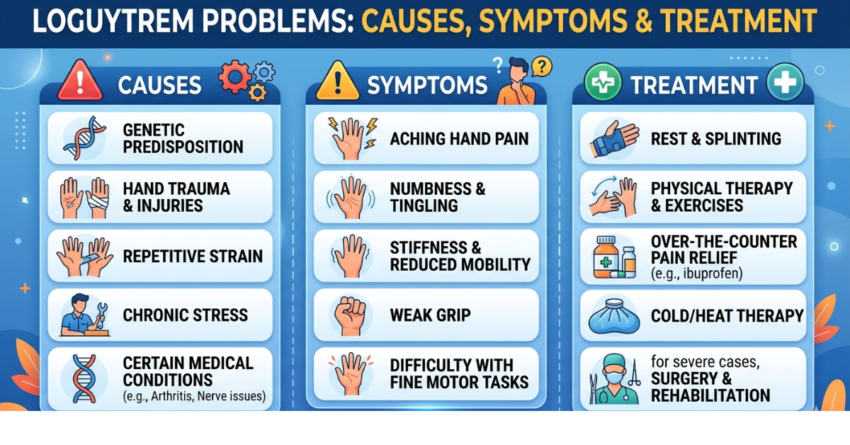
Causes of Loguytren Problems
The exact cause of Loguytren problems isn’t fully understood, but several factors may increase risk:
-
Genetics – Family history plays a strong role.
-
Age – Most cases occur in people over 50.
-
Gender – Men are more commonly affected.
-
Lifestyle Factors – Smoking, alcohol, and diabetes may contribute.
-
Medical Conditions – Certain medications and diseases like epilepsy have been linked to higher risk.
Understanding these risk factors can help you monitor your hand health and seek early treatment if needed.
Symptoms to Watch For
Loguytren problems usually progress slowly. Early recognition can prevent severe hand dysfunction. Common symptoms include:
-
Small lumps in the palm
-
Thickened cords under the skin
-
Fingers that gradually bend toward the palm
-
Difficulty placing your hand flat on a surface
-
Reduced hand function over time
Tip: Early-stage symptoms may be subtle. If you notice any signs, consult a healthcare professional promptly.
Diagnosis and Evaluation
A proper diagnosis usually involves:
-
Physical Examination: Doctors check for nodules, cord formation, and finger mobility.
-
Range of Motion Tests: Assessing how much fingers can bend or straighten.
-
Imaging (Rarely): Ultrasound or MRI is occasionally used to evaluate severity.
Early diagnosis is crucial for effective management and to prevent permanent contractures.
Treatment Options for Loguytren Problems
Treatment depends on severity and progression. Here’s a breakdown:
Non-Surgical Options
-
Observation: Mild cases may just require monitoring.
-
Steroid Injections: Reduce inflammation in nodules.
-
Physical Therapy: Stretching exercises can help maintain flexibility.
Surgical Options
-
Fasciectomy: Removal of thickened fascia to restore finger movement.
-
Needle Aponeurotomy: Minimally invasive procedure to break up cords.
-
Collagenase Injection: Enzyme injections to soften cords for easier finger extension.
Lifestyle Tip: Quitting smoking, controlling blood sugar, and hand exercises can complement treatment and prevent recurrence.
Prevention and Hand Care Tips
While you can’t always prevent Loguytren problems, these steps can help reduce risk or slow progression:
-
Maintain a healthy lifestyle.
-
Avoid repetitive trauma to the palms.
-
Stretch and exercise hands regularly.
-
Monitor for early signs and consult a doctor if changes occur.
FAQs About Loguytren Problems
Q1: Is Loguytren disease painful?
A1: Usually, it’s painless, though some nodules may be tender initially.
Q2: Can it affect daily tasks?
A2: Yes, advanced stages may limit grip, typing, or holding objects.
Q3: Is surgery always necessary?
A3: No, mild cases may just need observation or injections.
Q4: Can it recur after treatment?
A4: Yes, recurrence is possible, especially after surgery.
Q5: Are both hands affected?
A5: Often it starts in one hand but may eventually affect both.
Conclusion
Loguytren problems may start small and painless but can gradually limit hand function. Early recognition, proper evaluation, and timely intervention—whether non-surgical or surgical—can significantly improve outcomes. Remember, staying proactive with hand care, monitoring changes, and seeking professional guidance are key steps in managing this condition effectively.